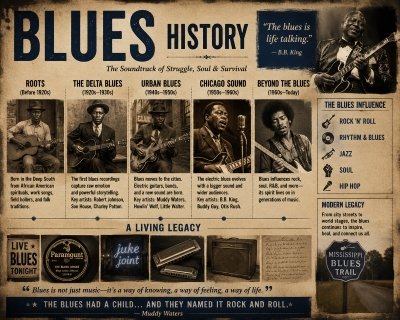
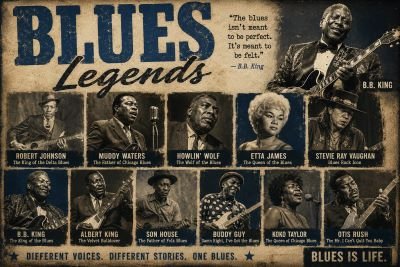
Blues music isn't a monolithic genre – it's a rich tapestry of regional styles, each with its own unique characteristics, instruments, and emotional flavors. Understanding these different styles helps you appreciate the full spectrum of blues and find the sounds that speak to your soul.
Delta Blues
Mississippi, 1900s-1940sDelta Blues is the original form of blues music, born in the Mississippi Delta region in the early 20th century. This raw, emotional style emerged from the African American experience in the rural South, combining African musical traditions with the spirituals and work songs of plantation life.
Characterized by its stark, powerful vocals and acoustic guitar accompaniment, Delta Blues is intensely personal and emotionally direct. Musicians often used slide guitar techniques, creating haunting sounds that matched the lyrics' themes of hardship, love, loss, and supernatural encounters.
The Delta style laid the foundation for all blues that followed. Its influence extends far beyond blues into rock, folk, and popular music. Without Delta Blues, there would be no Chicago Blues, no British Invasion, no rock and roll as we know it.
Key Characteristics
- Solo acoustic guitar accompaniment
- Slide/bottleneck guitar technique
- Raw, emotional vocal delivery
- Often in open tunings (Open G, Open D)
- Themes of hardship, love, and the supernatural
- Call-and-response between voice and guitar
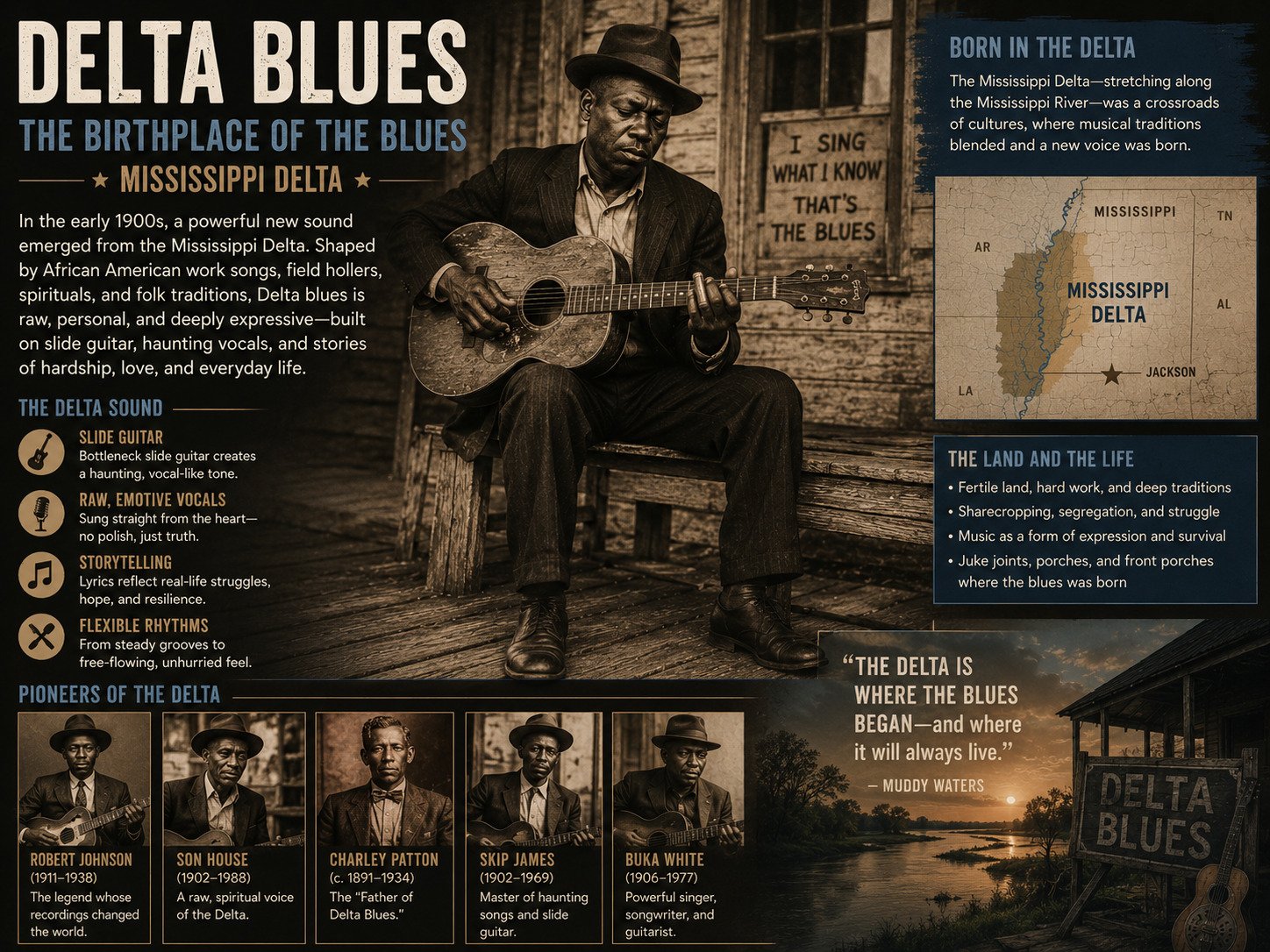
Essential Artists
Chicago Blues
Chicago, 1940s-1960sChicago Blues emerged when Delta musicians migrated north during the Great Migration, bringing their music to the urban landscape. In Chicago's bustling South Side clubs, the acoustic Delta sound was electrified and amplified to be heard over crowded, noisy venues.
This electrification transformed blues into something new and powerful. Full bands replaced solo performers, featuring electric guitar, amplified harmonica, bass, drums, and piano. The sound was louder, tighter, and more driving – perfect for dancing and partying in Chicago's legendary blues clubs.
Chess Records became the home of Chicago Blues, recording artists like Muddy Waters, Howlin' Wolf, Little Walter, and Willie Dixon. These recordings directly influenced the British Invasion and the development of rock music. Without Chicago Blues, there would be no Rolling Stones, no Led Zeppelin, no Eric Clapton.
Key Characteristics
- Electric guitar with amplification
- Full band: guitar, bass, drums, harmonica, piano
- Amplified harmonica (often through PA)
- Driving, danceable rhythm
- Prominent bass lines
- Call-and-response between instruments
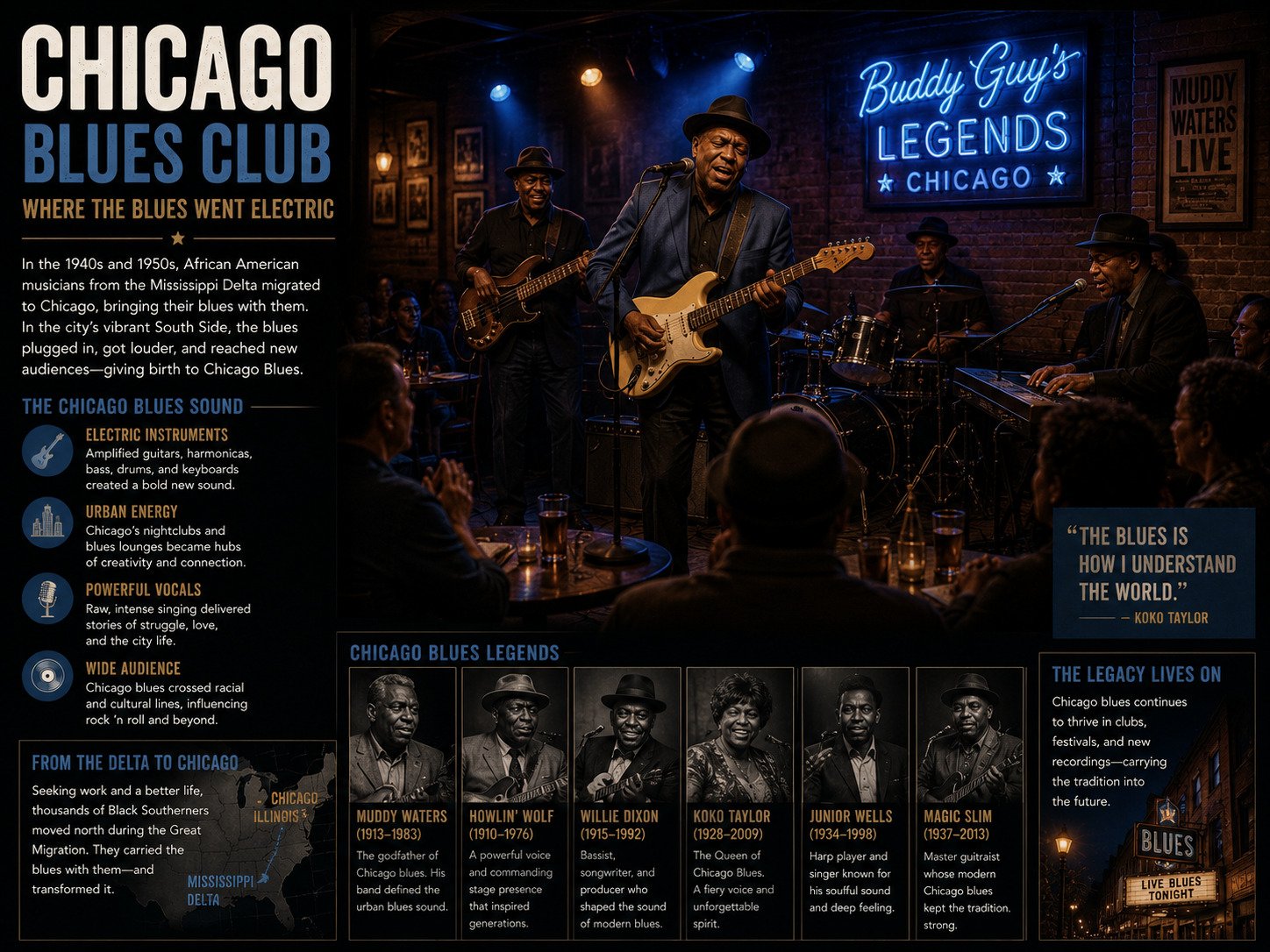
Essential Artists
Texas Blues
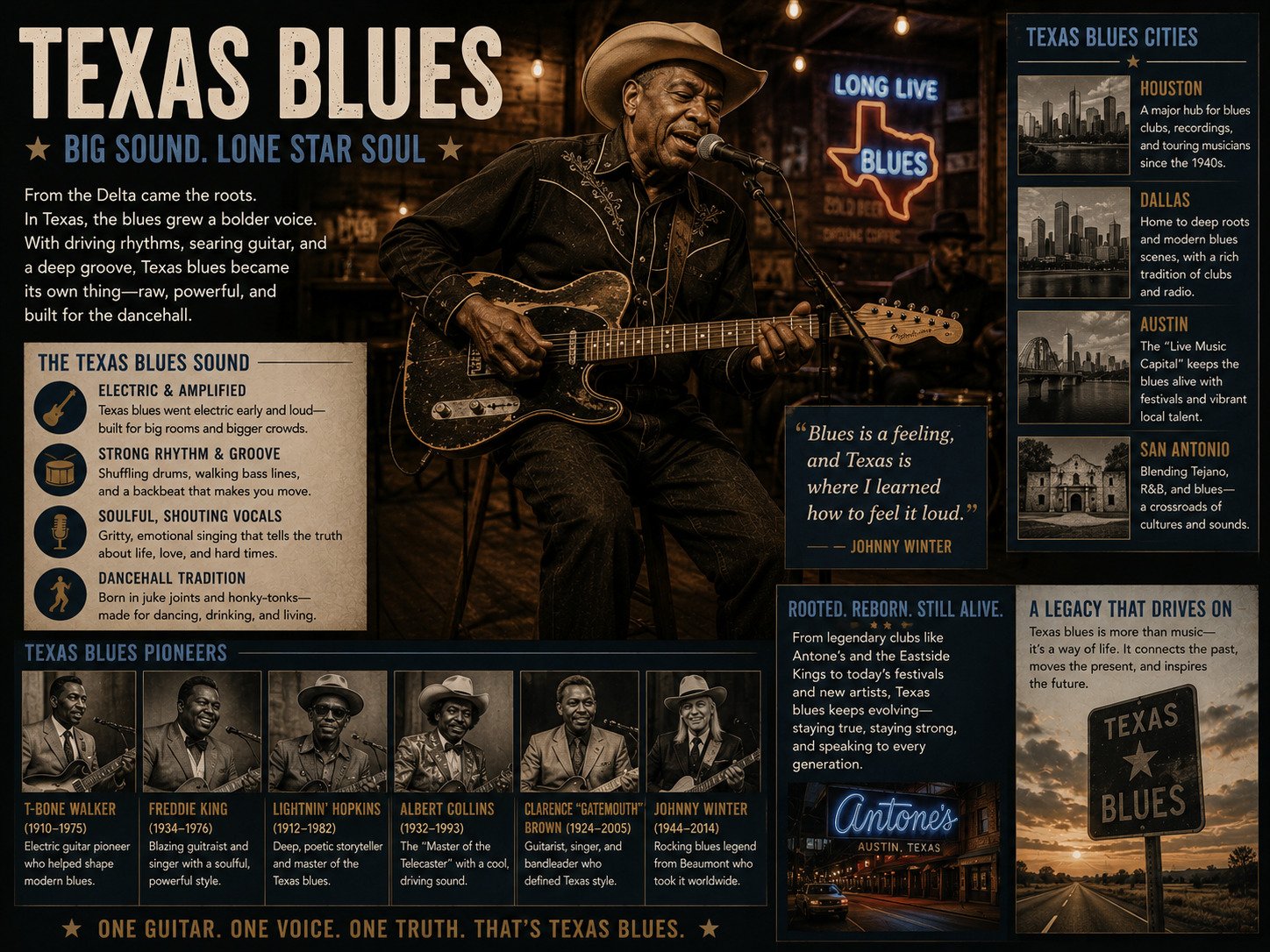
Texas, 1920s-PresentTexas Blues developed its own distinctive character, blending traditional blues with jazz, swing, and later rock influences. The style is characterized by a more relaxed, swinging feel compared to the intensity of Delta or Chicago blues, with an emphasis on fluid, horn-influenced guitar lines.
The state's size and diversity produced multiple regional variations. East Texas blues was closer to the Delta sound, while cities like Dallas and Houston developed more sophisticated urban styles. Austin became a major blues center, eventually producing Stevie Ray Vaughan, who sparked a worldwide blues revival in the 1980s.
Texas Blues guitarists are known for their clean, jazzy tone, precise technique, and ability to play long, flowing solo lines. T-Bone Walker pioneered many techniques later adopted by rock guitarists, including playing the guitar behind his head.
Key Characteristics
- Relaxed, swinging rhythm
- Jazz-influenced guitar phrasing
- Clean, warm guitar tone
- Horn section arrangements
- Longer, more complex solos
- Shuffle and swing beats
Essential Artists
Piedmont Blues
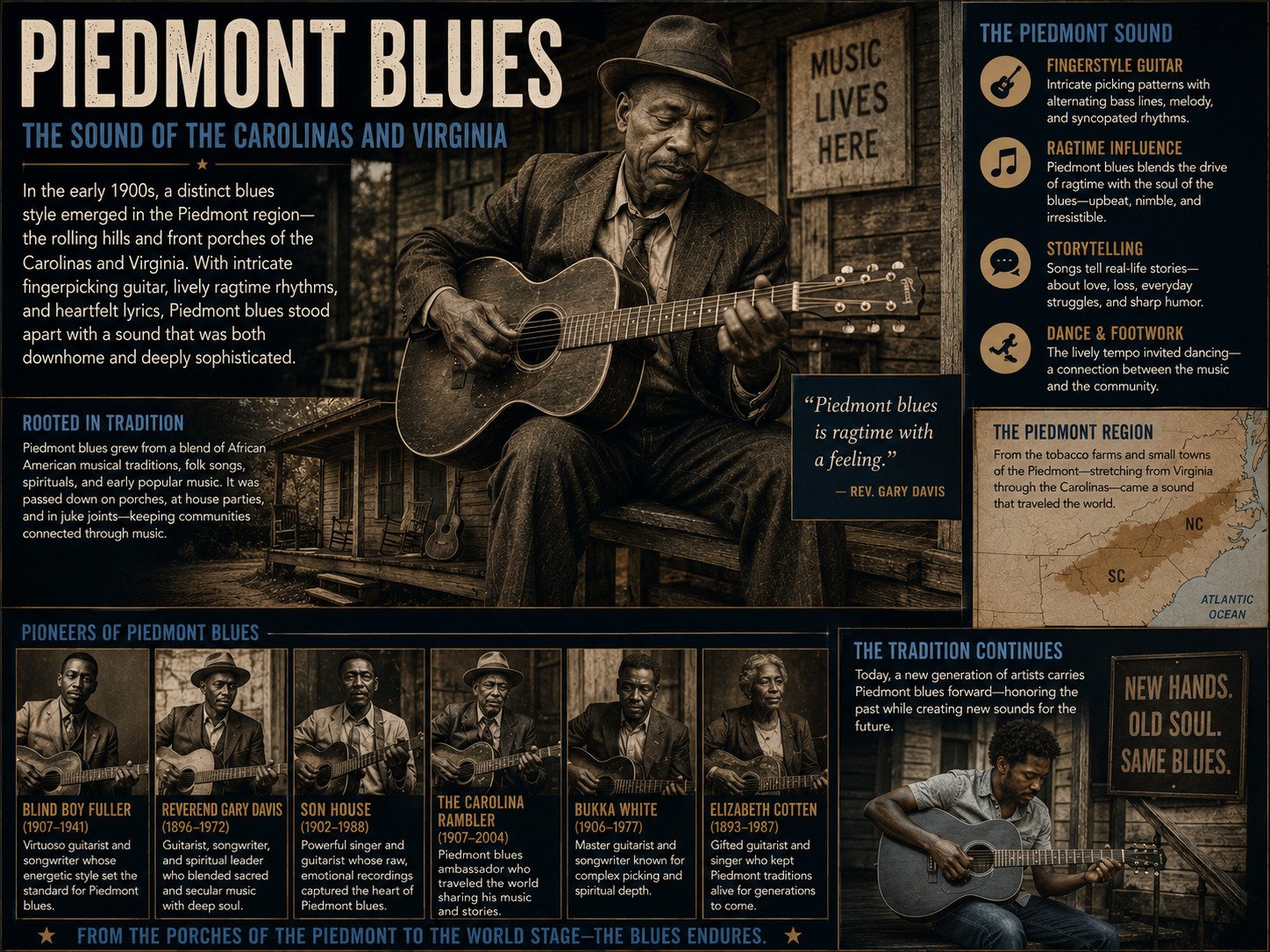
Southeast US, 1920s-1940sPiedmont Blues, also known as East Coast Blues, developed along the Atlantic seaboard from Virginia to Florida. This style is distinctly different from Delta Blues, featuring intricate fingerpicking patterns heavily influenced by ragtime piano music.
The style is characterized by an alternating bass pattern played with the thumb while the fingers pick out melody and rhythm on the higher strings. This creates a fuller, more orchestral sound than Delta Blues, often sounding like two guitarists playing together.
Piedmont Blues has a lighter, more melodic feel than its Delta counterpart, making it popular at parties and social gatherings. The music often features complex instrumental arrangements that showcase the guitarist's technical abilities.
Key Characteristics
- Intricate fingerpicking patterns
- Ragtime influence
- Alternating thumb bass
- Lighter, more melodic feel
- Complex instrumental arrangements
- Often in standard tuning
Essential Artists
British Blues
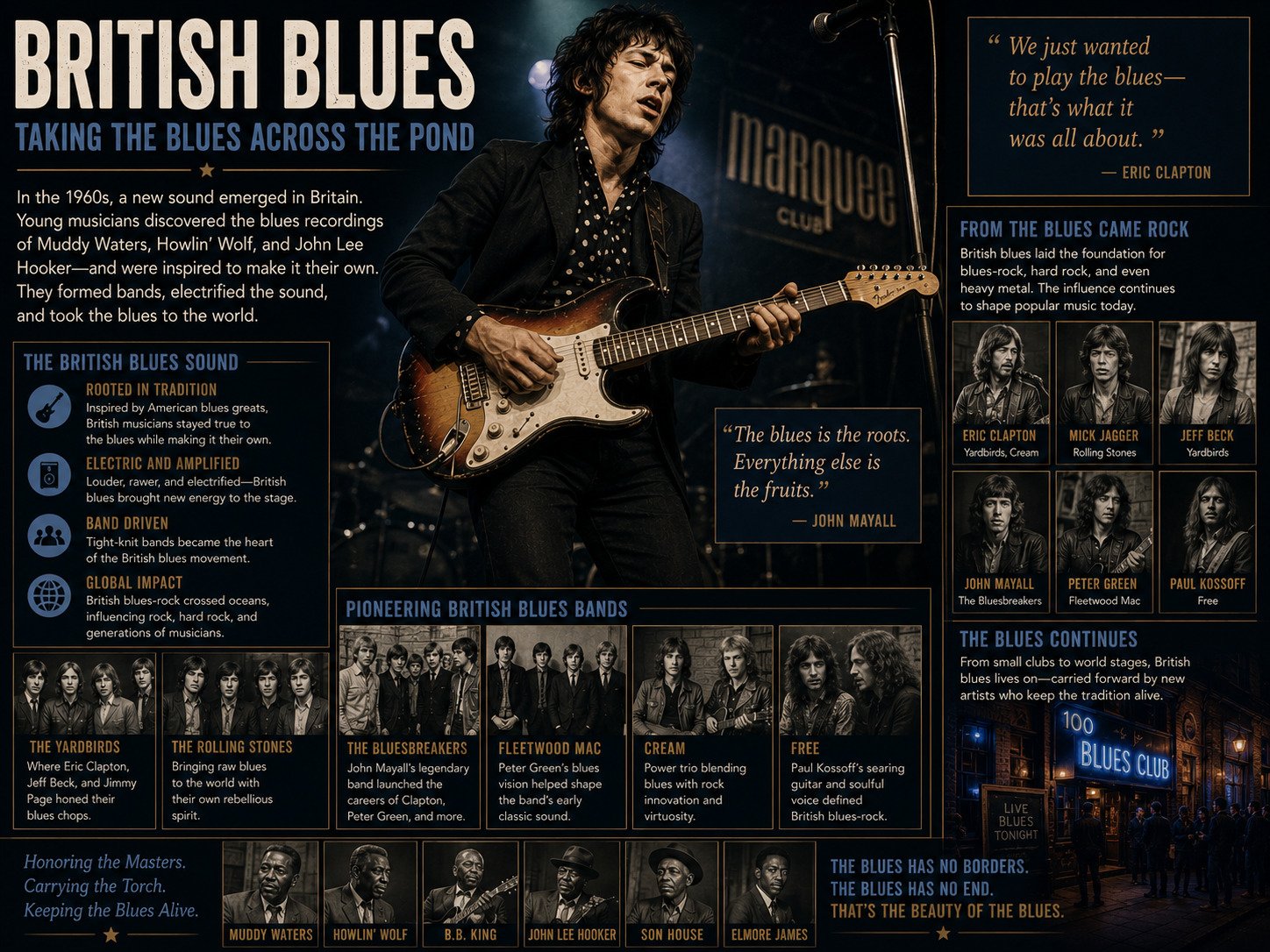
United Kingdom, 1960sBritish Blues emerged in the early 1960s when young British musicians discovered American blues records and became obsessed with recreating and reinterpreting the sound. This movement, known as the British Blues Boom, had an enormous impact on popular music worldwide.
British musicians approached blues with reverence but also innovation. They amplified the sound, added rock energy, and introduced blues to massive audiences who had never heard the original American artists. Ironically, British covers of blues songs often introduced white American audiences to black American music.
The British Blues scene spawned many of rock's greatest bands and guitarists. The Rolling Stones, Cream, Fleetwood Mac, and Led Zeppelin all emerged from this movement, each pushing blues in new directions while maintaining respect for the tradition.
Key Characteristics
- Heavier, more amplified sound
- Rock energy and attitude
- Extended guitar solos
- Faithful covers of American classics
- Studio experimentation
- Power trio format popular
Essential Artists
Jump Blues
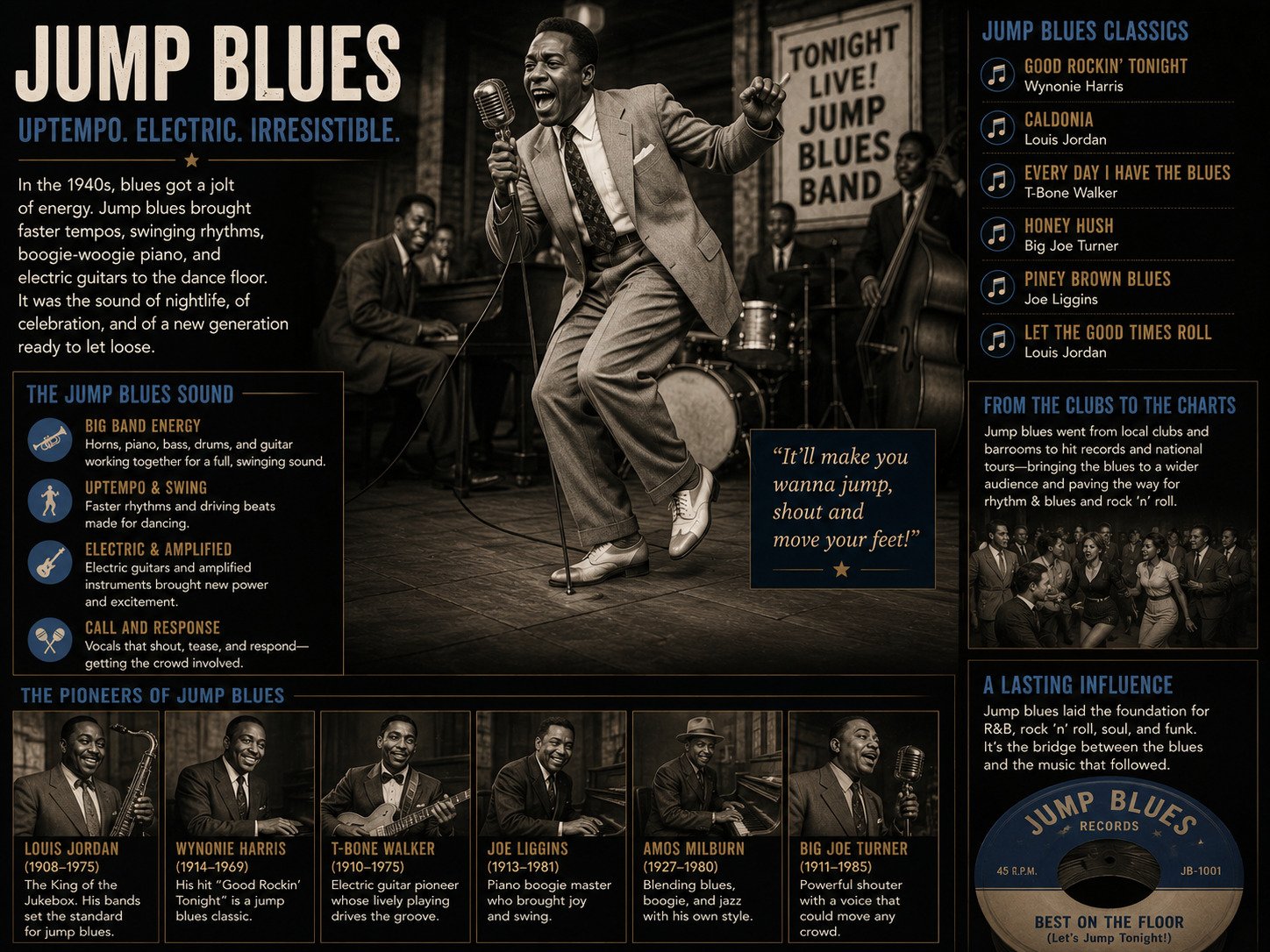
US, 1940s-1950sJump Blues emerged in the 1940s as a high-energy, uptempo style that combined blues with big band jazz and swing. This danceable, exuberant music was the direct predecessor of rock and roll, influencing everyone from Chuck Berry to Little Richard.
The style features prominent saxophone sections, walking bass lines, and a driving boogie-woogie piano. The music is designed to make people move, with infectious rhythms and shouted vocals that generated excitement in dance halls across America.
Jump Blues artists like Louis Jordan achieved massive crossover success, topping both R&B and pop charts. The style's energy and accessibility made it hugely popular and laid the groundwork for the rock and roll explosion of the mid-1950s.
Key Characteristics
- Uptempo, danceable rhythm
- Prominent saxophone section
- Boogie-woogie piano
- Shouted, energetic vocals
- Walking bass lines
- Big band influence
Essential Artists
Blues Genres at a Glance
| Genre | Era | Key Instrument | Sound | Tempo |
|---|---|---|---|---|
| Delta Blues | 1900s-1940s | Acoustic/Slide Guitar | Raw, haunting | Slow to medium |
| Chicago Blues | 1940s-1960s | Electric Guitar, Harmonica | Electrified, powerful | Medium, driving |
| Texas Blues | 1920s-Present | Electric Guitar | Jazzy, swinging | Relaxed shuffle |
| Piedmont Blues | 1920s-1940s | Fingerpicked Guitar | Light, melodic | Upbeat, ragtime |
| British Blues | 1960s | Electric Guitar | Heavy, rock-influenced | Variable |
| Jump Blues | 1940s-1950s | Saxophone, Piano | Energetic, danceable | Uptempo |
Discover Your Blues Style
Listen to radio stations featuring all these blues genres - find your favorite sound!
Start Listening Free